History of Riverview
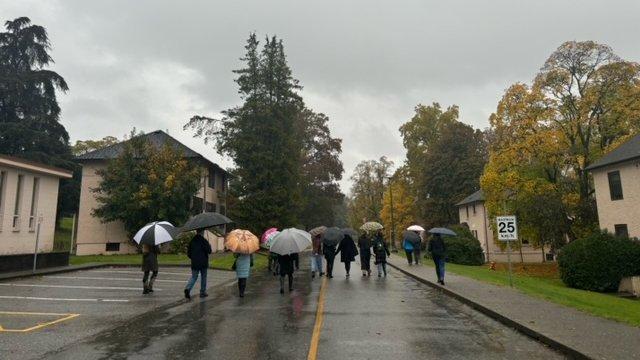
Riverview has always been a source of both inspiration and serenity. The year-round beauty of the mature trees creates a haven of peace that touches everyone who lives, works, or visits here.
Land Acknowledgement
The Riverview Horticultural Centre Society acknowledges our presence on the ancestral and unceded territory of the kʷikʷəƛ̓əm (Kwikwetlem) First Nation.
We recognize the deep, continuous relationship the kʷikʷəƛ̓əm have with these lands, historically known as Riverview, are also known by the kʷikʷəƛ̓əm people as səmiq̓ʷəʔelə — the Place of the Great Blue Heron (pronounced suh-MEE-kwuh-EL-uh).
We extend our deep respect to the kʷikʷəƛ̓əm people for their enduring stewardship of this land and recognize their ongoing, living connection to it. We are committed to conducting our work with respect and pursuing a path of reconciliation as guests in this territory.
Land Acknowledgement
The Riverview Horticultural Centre Society acknowledges our presence on the ancestral and unceded territory of the kʷikʷəƛ̓əm (Kwikwetlem) First Nation.
We recognize the deep, continuous relationship the kʷikʷəƛ̓əm have with these lands, historically known as Riverview, are also known by the kʷikʷəƛ̓əm people as səmiq̓ʷəʔelə — the Place of the Great Blue Heron (pronounced suh-MEE-kwuh-EL-uh).
We extend our deep respect to the kʷikʷəƛ̓əm people for their enduring stewardship of this land and recognize their ongoing, living connection to it. We are committed to conducting our work with respect and pursuing a path of reconciliation as guests in this territory.
Establishment (1904–1913)
In 1904, the Province of British Columbia set aside 1,000 acres of land here, close to the confluence of the Fraser and Coquitlam Rivers, for the construction of a hospital. Its purpose was to provide treatment facilities for the mentally ill, with the location selected in the belief that the natural setting would help in the therapeutic treatment of patients.
In 1908, Provincial Secretary Dr. Henry Esson Young approved the building of the hospital on the upland site and backed a plan to create a botanical garden. Three years later, he appointed John Davidson as Provincial Botanist to develop the first true botanical garden in Canada on this site.
Establishment (1904–1913)
In 1904, the Province of British Columbia set aside 1,000 acres of land here, close to the confluence of the Fraser and Coquitlam Rivers, for the construction of a hospital. Its purpose was to provide treatment facilities for the mentally ill, with the location selected in the belief that the natural setting would help in the therapeutic treatment of patients.
In 1908, Provincial Secretary Dr. Henry Esson Young approved the building of the hospital on the upland site and backed a plan to create a botanical garden. Three years later, he appointed John Davidson as Provincial Botanist to develop the first true botanical garden in Canada on this site.
The Buildings
- West Lawn (1913):
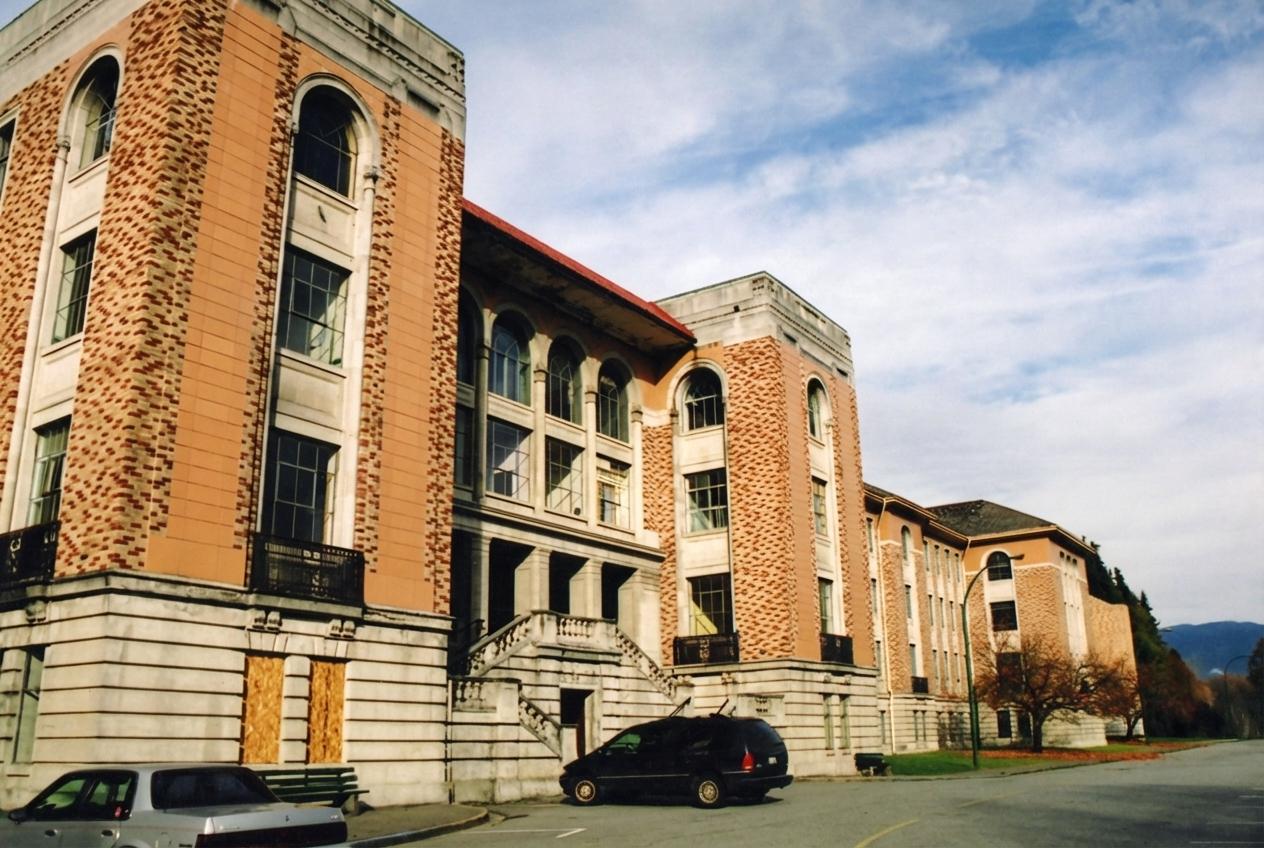
Originally known as the “Male Chronic Wing,” this marked the official beginnings of the hospital.
- Centre Lawn (1924):
Originally the acute psychopathic wing used for testing and recommending treatments. It was the last facility to close in 2012.
- East Lawn (1930):
The female chronic unit, which also housed British Columbia’s first training school for psychiatric nurses.
- Crease Clinic (1934):
Originally the Veteran’s Unit for WWI veterans suffering from shell shock.
The Buildings
- West Lawn (1913):
Originally known as the “Male Chronic Wing,” this marked the official beginnings of the hospital.
- Centre Lawn (1924):
Originally the acute psychopathic wing used for testing and recommending treatments. It was the last facility to close in 2012.
- East Lawn (1930):
The female chronic unit, which also housed British Columbia’s first training school for psychiatric nurses.
- Crease Clinic (1934):
Originally the Veteran’s Unit for WWI veterans suffering from shell shock.
Ecological Value
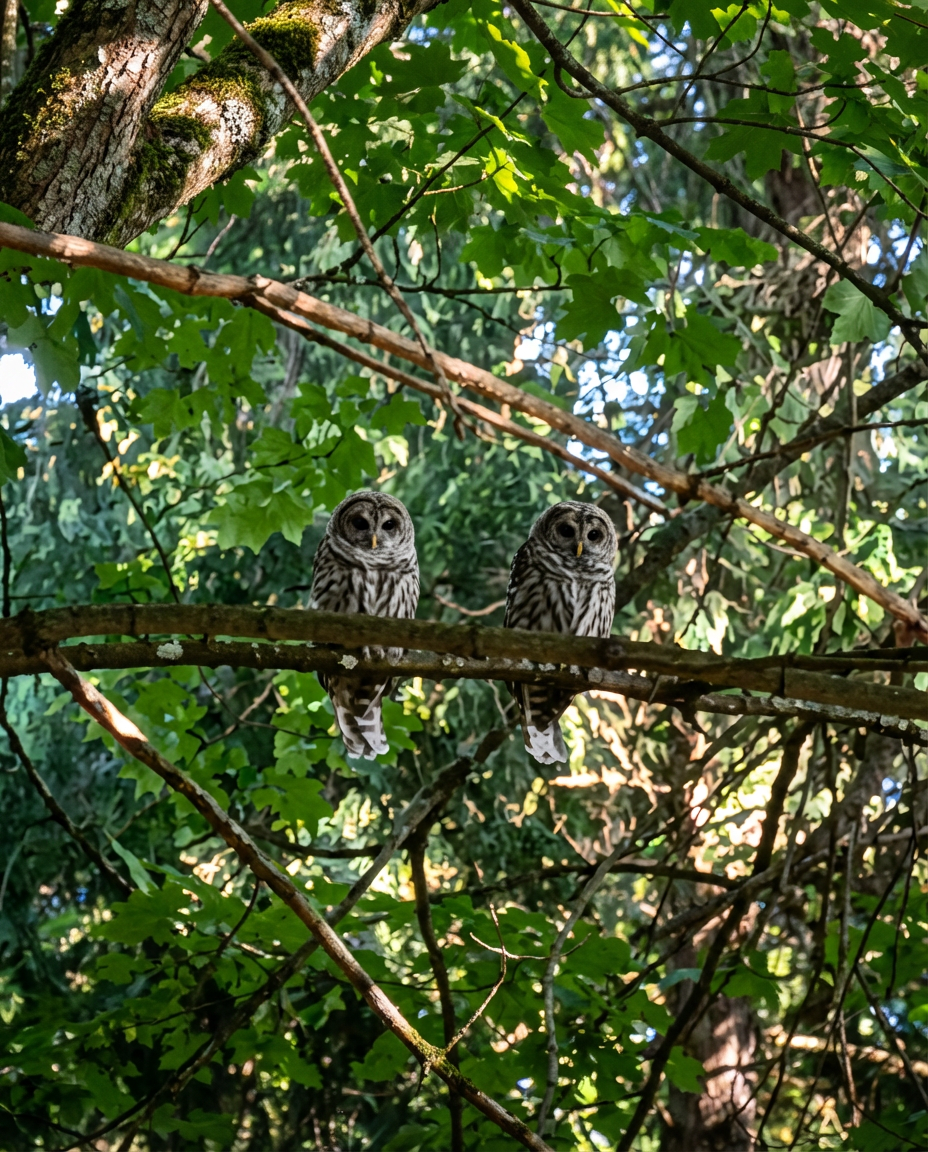
Home to over 80 bird species, the ecological integrity of Riverview is a prime example of a biodiversity hotspot. Numerous creeks flow into the Coquitlam River, providing important habitat for spawning salmon, while wetlands and open meadows support diverse wildlife.
Ecological Value
Home to over 80 bird species, the ecological integrity of Riverview is a prime example of a biodiversity hotspot. Numerous creeks flow into the Coquitlam River, providing important habitat for spawning salmon, while wetlands and open meadows support diverse wildlife.
The Arboretum
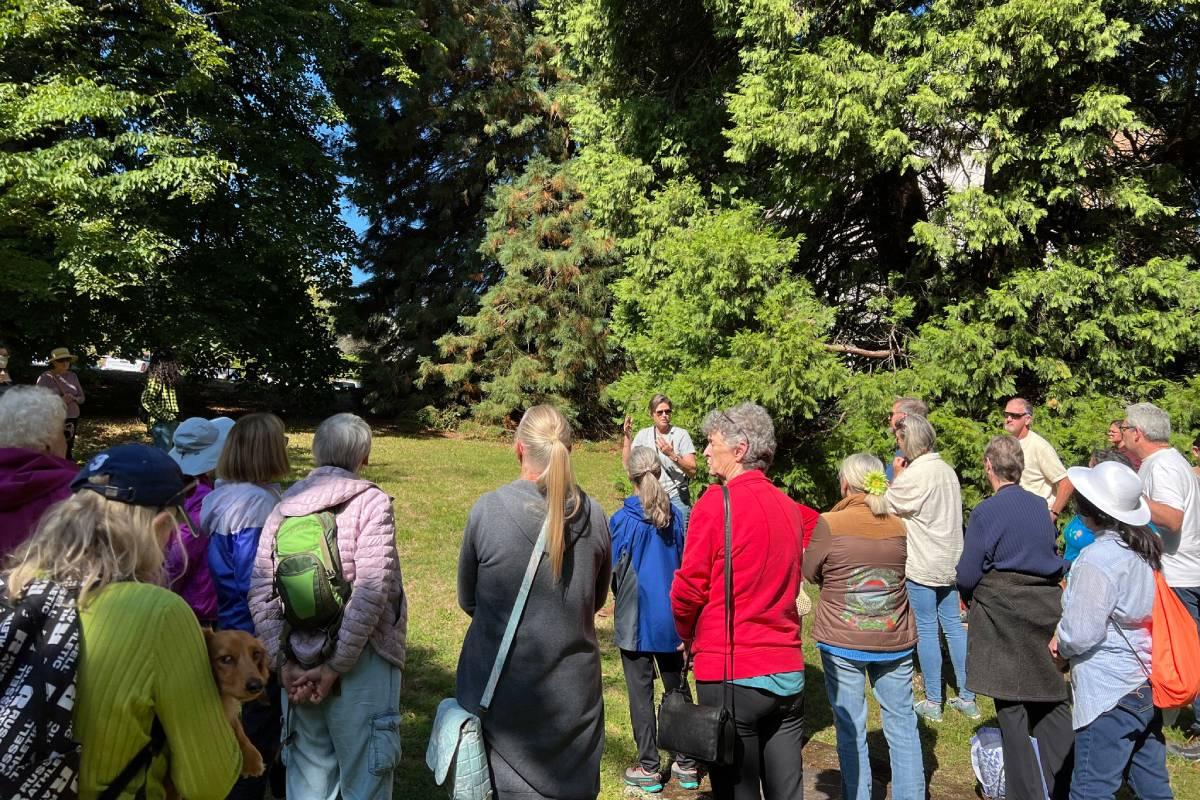
A Living Museum Although the original botanical garden collection was moved to UBC in 1916, the arboretum remained. Today, there are around 1,800 trees on these lands that make up this magnificent treasure.
By the time head gardener Jack Renfrew retired in 1947, the arboretum comprised over 160 species and varieties of trees from most continents. The grounds around each building were designed to resemble those of an English country estate.
The Collections Today, over 1,800 significant trees have been identified and tagged in the Riverview Heritage Tree Inventory.
Significance:
A nationally significant collection of trees from around the world.
Value:
Apart from their aesthetic importance, the trees form a valuable gene pool and source of seeds.
The Arboretum
A Living Museum Although the original botanical garden collection was moved to UBC in 1916, the arboretum remained. Today, there are around 1,800 trees on these lands that make up this magnificent treasure.
By the time head gardener Jack Renfrew retired in 1947, the arboretum comprised over 160 species and varieties of trees from most continents. The grounds around each building were designed to resemble those of an English country estate.
The Collections Today, over 1,800 significant trees have been identified and tagged in the Riverview Heritage Tree Inventory.
Significance:
A nationally significant collection of trees from around the world.
Value:
Apart from their aesthetic importance, the trees form a valuable gene pool and source of seeds.
Finnie's Garden
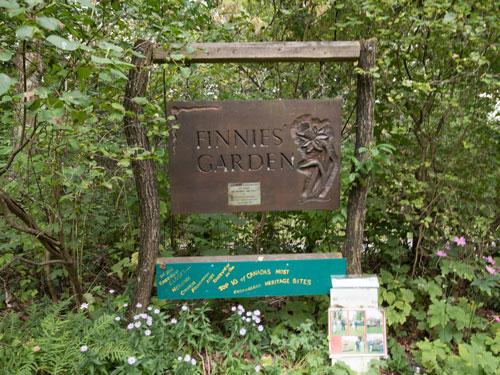
A Hidden Treasure Finnie’s Garden started in 1951 as a place where people who lived at Riverview could play outdoors and enjoy working with growing things. Art Finnie, a nurse and navy veteran, was asked to set up the garden, originally known as “Farm View.”
In a report, Art Finnie wrote that “it was the best therapy for the patients that they could have had.” Today, we can still see the fish pond, stone terraces, flower beds, and plots shown in the original plans.
Restoration and Naturescaping Volunteers from the RHCS (aka “Friends of Finnie’s”) clean up the overgrowth to show the unique beauty and craftsmanship of the garden. We use "Naturescaping" methods: gardening with native plants to conserve water and create natural wildlife habitats.
The Shed Mural In 2004, artist Gay Mitchell designed a mural for the garden shed featuring 50 indigenous and naturalized plants. The painting is a teaching panel of flowering species, many of which grow in the garden itself.
Getting to Finnie's Garden
Drivers:
Turn west on Holly Drive and up Oak Crescent. Follow Holly Drive to the original main Entrance of the Hospital.
Walkers:
Go straight ahead. Well down on the left is a fence gate. Go through and left down the hill a few meters to the lawn area and Finnie’s Garden sign.
Finnie's Garden
A Hidden Treasure Finnie’s Garden started in 1951 as a place where people who lived at Riverview could play outdoors and enjoy working with growing things. Art Finnie, a nurse and navy veteran, was asked to set up the garden, originally known as “Farm View.”
In a report, Art Finnie wrote that “it was the best therapy for the patients that they could have had.” Today, we can still see the fish pond, stone terraces, flower beds, and plots shown in the original plans.
Restoration and Naturescaping Volunteers from the RHCS (aka “Friends of Finnie’s”) clean up the overgrowth to show the unique beauty and craftsmanship of the garden. We use "Naturescaping" methods: gardening with native plants to conserve water and create natural wildlife habitats.
The Shed Mural In 2004, artist Gay Mitchell designed a mural for the garden shed featuring 50 indigenous and naturalized plants. The painting is a teaching panel of flowering species, many of which grow in the garden itself.
Getting to Finnie's Garden
Drivers:
Turn west on Holly Drive and up Oak Crescent. Follow Holly Drive to the original main Entrance of the Hospital.
Walkers:
Go straight ahead. Well down on the left is a fence gate. Go through and left down the hill a few meters to the lawn area and Finnie’s Garden sign.
Finnie’s Garden Shed Botanical Painting / Mural
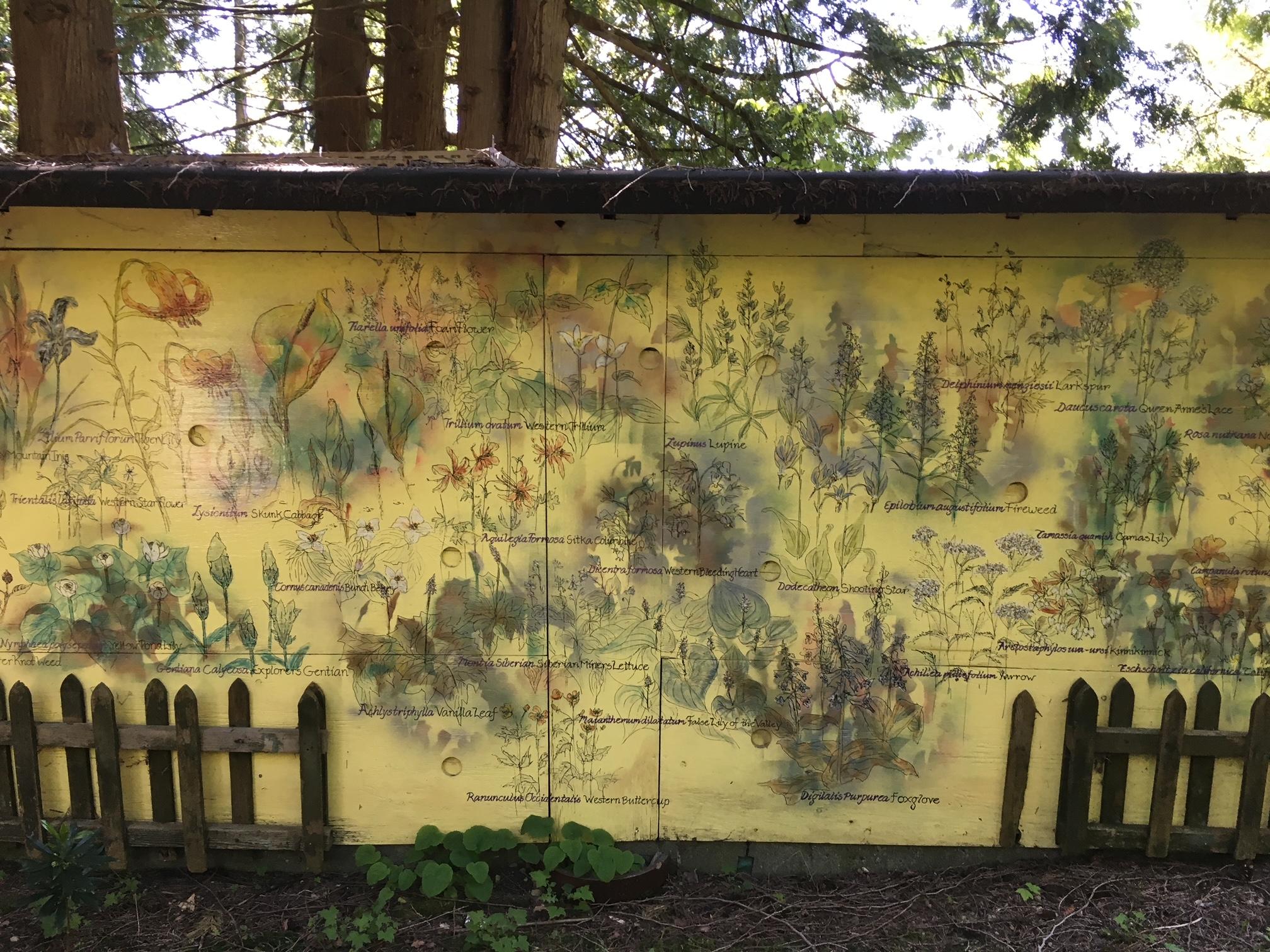
One day in 2004, Norma Gillespie spoke to me at our plots in Colony Farm Gardens. She asked me to design a mural for Finnie’s Garden on the Riverview Lands. I knew Norma and Don Gillespie well through the Burke Mountain Naturalists. So, I said yes.
Before this time, I had been involved with The Riverview Horticultural Centre Society and Treefest helping to organize and participating in artists displays and demonstrations; encouraging an informal children’s art display, later shown at the Evergreen Cultural Centre art room; and providing artwork for the society’s pamphlet.
I imagined a teaching panel of 50 indigenous and naturalized plants, flowering species, many of which grew in the garden itself.
I began by preparing preliminary drawings of each species.
The 6’ x 16’ west side of the shed had recently been primed with yellow paint.
Negative cut-out shapes of the plants were used to spray coloured and metallic acrylic paint to the surface. This allowed me to design the composition, taking into consideration the placement, shape, colour and size of the plants to create an overall design.
I chose familiar and common species that could be easily recognized. Using permanent black ink marker, I drew the plants freehand as I referred to my original researched drawings.
Then, the acrylic paint colour was applied by brush. My dear friend, visual artist Laura Babak-Nagy, assisted me to help provide colour to the plants, as our 3- and 4-year-old children Christina and Emery played in the garden beside us.
The painting is a bittersweet reminder of our close friendship, and that of our families, as Laura died shortly after the completion of our collaboration.
Finally, I rendered the names of the plant species in English and Latin in black and metallic mauve permanent markers.
Longtime friend and Finnie’s Garden fence and trellis maker Niall Williams applied approximately 7 coats of clear acrylic varnish to the painted surface to protect the work.
The concept of this piece was developed with the hope and awareness that many people would continue to walk and rest at the site of the painting in Finnie’s Garden seeking peace and refreshment.
My grateful thanks to Laura Babak-Nagy and Niall Williams for dreaming along with me. And especially to Norma and Don Gillespie and Riverview Horticultural and Burke Mountain Naturalists friends, and all those who cherish this unique place.
- Gay Mitchel
Finnie’s Garden Shed Botanical Painting / Mural
One day in 2004, Norma Gillespie spoke to me at our plots in Colony Farm Gardens. She asked me to design a mural for Finnie’s Garden on the Riverview Lands. I knew Norma and Don Gillespie well through the Burke Mountain Naturalists. So, I said yes.
Before this time, I had been involved with The Riverview Horticultural Centre Society and Treefest helping to organize and participating in artists displays and demonstrations; encouraging an informal children’s art display, later shown at the Evergreen Cultural Centre art room; and providing artwork for the society’s pamphlet.
I imagined a teaching panel of 50 indigenous and naturalized plants, flowering species, many of which grew in the garden itself.
I began by preparing preliminary drawings of each species.
The 6’ x 16’ west side of the shed had recently been primed with yellow paint.
Negative cut-out shapes of the plants were used to spray coloured and metallic acrylic paint to the surface. This allowed me to design the composition, taking into consideration the placement, shape, colour and size of the plants to create an overall design.
I chose familiar and common species that could be easily recognized. Using permanent black ink marker, I drew the plants freehand as I referred to my original researched drawings.
Then, the acrylic paint colour was applied by brush. My dear friend, visual artist Laura Babak-Nagy, assisted me to help provide colour to the plants, as our 3- and 4-year-old children Christina and Emery played in the garden beside us.
The painting is a bittersweet reminder of our close friendship, and that of our families, as Laura died shortly after the completion of our collaboration.
Finally, I rendered the names of the plant species in English and Latin in black and metallic mauve permanent markers.
Longtime friend and Finnie’s Garden fence and trellis maker Niall Williams applied approximately 7 coats of clear acrylic varnish to the painted surface to protect the work.
The concept of this piece was developed with the hope and awareness that many people would continue to walk and rest at the site of the painting in Finnie’s Garden seeking peace and refreshment.
My grateful thanks to Laura Babak-Nagy and Niall Williams for dreaming along with me. And especially to Norma and Don Gillespie and Riverview Horticultural and Burke Mountain Naturalists friends, and all those who cherish this unique place.
- Gay Mitchel